
Dark Energy and Matter in the Universe or a Manifestation of the Power of the Lord God?
- A Scientific and Philosophical Article from a Christian Perspective *
Abstract
Modern cosmology confronts humanity with one of the most profound questions about the nature of the Universe: What is dark energy and matter, and what causes the accelerated expansion of cosmic space? According to the standard cosmological model, approximately 68% of the total energy content of the Universe is attributed to dark energy, whose physical nature remains incompletely understood.
This article examines current scientific knowledge about dark matter and dark energy and proposes a Christian philosophical thesis: what science describes through the observable effects of dark energy may be interpreted, from a perspective of faith, as a manifestation of the power through which the Lord God sustains and governs the Universe.
This thesis is not presented as an established law of physics, but as an interpretation of the relationship between scientific knowledge, invisible reality, and the spiritual understanding of God’s presence in creation.
Keywords: dark matter, dark energy, Universe, cosmology, God, spiritual dimension, accelerated expansion, physics and faith.
1. Introduction: The Universe and the Limits of Human Knowledge
Humanity has studied the stars, planets, and celestial bodies for thousands of years. With the development of telescopes, mathematics, and modern physics, we have begun to understand the structure and evolution of the cosmos with increasing precision.
Yet the more we discover, the more clearly we recognize that the ordinary matter familiar to us represents only a small fraction of the contents of the Universe.
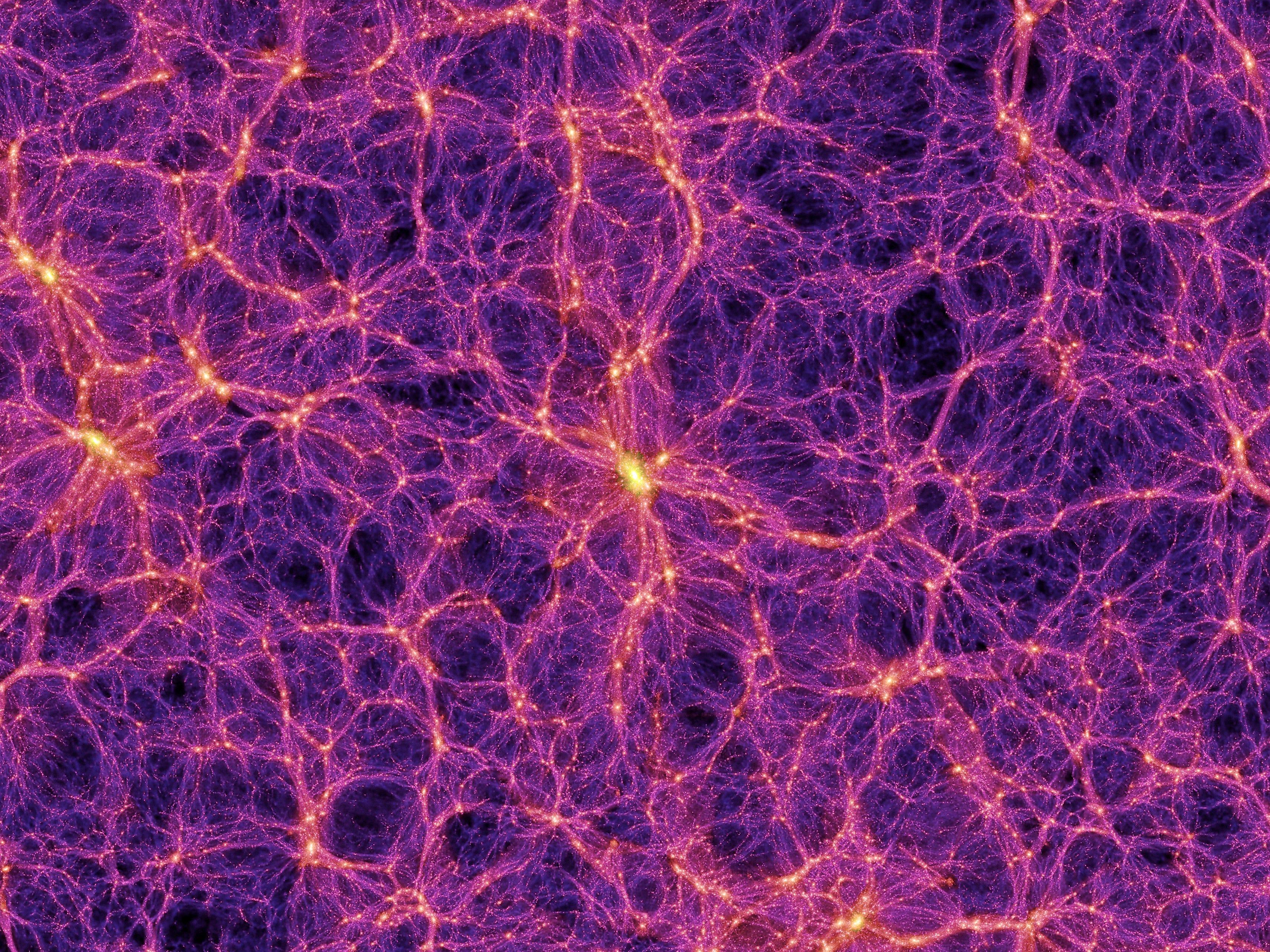
Stars, planets, galaxies, clouds of gas, and living organisms are made of ordinary matter. According to the standard cosmological model, however, ordinary matter accounts for approximately 5% of the cosmic energy budget. About 27% is attributed to dark matter, while approximately 68% is attributed to dark energy.
This means that a substantial part of the Universe is described in terms of components whose fundamental nature we do not yet fully understand.
This raises a fundamental philosophical question: Are invisible cosmic phenomena simply physical processes that science has not yet explained, or might they also be considered manifestations of a deeper reality that religious faith identifies as the action of God?
Science and Christian faith approach this question in different ways. Science investigates observable phenomena and explanations that can be tested. Faith addresses questions concerning ultimate causes, meaning, and the spiritual foundation of existence.
A meaningful dialogue between these perspectives is possible without treating either one as automatic proof of the other.
2. What Is Dark Matter?
Dark matter is one of the greatest mysteries in modern astrophysics. Unlike ordinary matter, it does not emit, reflect, or absorb light in a way that allows it to be directly observed using conventional astronomical instruments.
Scientists infer its existence primarily from its gravitational influence on visible objects.
The main lines of evidence include:
- The rotation of galaxies. Stars in the outer regions of many galaxies move faster than can be explained by the gravitational influence of visible matter alone.
- Gravitational lensing. Light from distant galaxies is bent by gravitational fields associated with mass that often exceeds what can be accounted for by visible objects.
- The structure of the Universe. Observations of galaxy clusters and the cosmic microwave background support models in which substantial quantities of invisible matter contribute to the formation of cosmic structures.
We still do not know with certainty what dark matter is made of. Possibilities under investigation include hypothetical particles such as axions and weakly interacting massive particles (WIMPs), but no definitive identification has yet been confirmed.
From a philosophical perspective, an important principle emerges: something may be inaccessible to direct observation while its presence is inferred from its effects on other objects.
This principle is also interesting from a religious perspective. In the Christian tradition, God is not understood as a material object that must be observed through a telescope, but as a spiritual reality whose action may be contemplated through the existence and order of creation.
This is a philosophical analogy, not scientific evidence that dark matter is the power of God.
3. What Is Dark Energy?
Dark energy is different from dark matter. While dark matter manifests itself through gravitational attraction and contributes to the formation of cosmic structures, dark energy is the name scientists give to an unknown component or physical mechanism associated with the accelerated expansion of the Universe.
In 1998, two independent research teams found that distant Type Ia supernovae appeared farther away than expected in models in which cosmic expansion was gradually slowing down. This discovery led to the conclusion that the expansion of the Universe is accelerating. In 2011, Saul Perlmutter, Brian Schmidt, and Adam Riess received the Nobel Prize in Physics for discoveries related to this phenomenon.
What do we know today?
- The Universe is expanding.
- Observations indicate that its expansion is accelerating.
- In the standard cosmological model, dark energy accounts for approximately 68–70% of the total cosmic energy budget.
- Its fundamental physical nature has not been definitively established.
- We do not know whether it is an intrinsic property of space, a dynamic field, or an indication that our understanding of gravity needs to be revised.
Scientists therefore possess mathematical models and observational evidence that describe the behaviour of dark energy, but they do not yet have a definitive answer to what it actually is.
An important distinction must be made here: dark energy has not been established as a conventional mechanical force that literally pushes galaxies apart. In the standard description, accelerated expansion is associated with the energy content and negative pressure of dark energy within the equations of General Relativity.
4. In What Units Is Dark Energy Measured, and How Many Kilojoules Does It Represent?
This is an important question because we must distinguish between the total amount of energy and energy density.
A joule (J) is a unit of energy, while a kilojoule (kJ) equals 1,000 joules. Dark energy, however, is commonly characterized in terms of energy density: the amount of energy associated with a given volume of space.
Approximate energy density of dark energy
A representative estimate for the present-day dark energy density is:
Approximately 6 × 10⁻¹⁰ joules per cubic metre (J/m³).
Expressed in kilojoules per cubic metre, this becomes:
Approximately 6 × 10⁻¹³ kJ/m³.
This is an approximate value consistent with cosmological models constrained by observations. It is not a direct measurement of an unknown microscopic substance.
At first glance, this number appears extraordinarily small. However, it applies to every cubic metre of space. When enormous cosmic volumes are considered, the total energy corresponding to this density becomes immense.
How much energy would dark energy represent in the observable Universe?
Using an approximate radius of 46.5 billion light-years for the observable Universe and assuming an average dark energy density of 6 × 10⁻¹⁰ J/m³, we can make an illustrative estimate.
The relationship is:
E = ρE × V
where:
- E is the total energy;
- ρE is the energy density;
- V is the volume of the observable Universe.
The approximate result is:
E ≈ 2 × 10⁶⁸ kJ
This is an estimate that depends on the adopted cosmological model and the definition of the observable volume. It is not a direct measurement of the total energy contained in a physical substance.
It is also important to emphasize that this calculation does not determine the total energy of the entire Universe. We do not know whether the entire Universe is infinite, and defining the total energy of a dynamic spacetime is more complicated than simply adding up the energy inside a stationary container.
Nor do these numbers tell us how much energy God possesses. They describe parameters of a physical model of the Universe.
5. My Thesis: Dark Energy as a Manifestation of the Power of the Lord God
After examining the scientific facts, we can turn to the philosophical and spiritual question.
Could dark energy be interpreted as a manifestation of the power of the Lord God, through which He sustains and governs the Universe from the spiritual dimension?
My thesis is that this interpretation can be defended as a Christian philosophical hypothesis.
From this perspective, the Lord God need not be understood as a material object located at a particular point in space. If God is a spiritual reality, His existence would not necessarily be measurable by ordinary physical instruments in the same way that we measure the temperature of a star or the mass of a planet.
A believer may understand the structure, laws, and evolution of the Universe as manifestations of God’s will and creative power.
This understanding can be developed in several directions.
5.1. The Invisible Cause and Its Visible Effects
In everyday life, we often establish the existence of something through its consequences. We cannot directly see a gravitational field with the naked eye, but we can measure the motion of bodies. We cannot see an electromagnetic field directly, but we can measure its effects on charged particles.
These examples demonstrate that invisibility alone does not prevent scientific investigation. At the same time, they do not mean that every invisible reality must be of the same nature.
By analogy, my spiritual thesis is this: if the Lord God acts beyond the material dimension, His action may not be directly accessible to sensory observation. Instead, a believer may contemplate His action through the existence and order of creation.
In this sense, dark energy may serve as a starting point for reflection on God’s action in the Universe. However, the claim that dark energy itself is the power of God requires grounds beyond the mere similarity between invisibility and observable effects.
5.2. God as the Sustaining Cause of the Universe
In Christian theology, God is not merely the Creator of the world in the distant past. He is also understood as the One upon whom the continuing existence of creation depends.
The Epistle to the Hebrews states that Christ is the One who sustains all things by His powerful word (Hebrews 1:3).
This biblical passage presents a spiritual perspective in which the existence of the Universe is not regarded as a self-sufficient fact, but as something dependent upon God’s power.
If we accept this perspective, the laws of the cosmos and physical processes may be understood as part of the order of creation.
This does not necessarily require God to be identified with a particular physical field or form of energy. Rather, it suggests the possibility that the physical Universe depends on a deeper cause that theology identifies as God.
5.3. The Spiritual Dimension and the Limits of Material Instruments
A particularly important part of this thesis is the idea that the Lord God governs the Universe from the spiritual dimension.
This idea can be expressed as follows:
If the spiritual dimension exists and is not part of ordinary physical spacetime, material instruments may be unable to establish its nature directly. Telescopes detect electromagnetic radiation, detectors measure physical interactions, and cosmological observations allow us to reconstruct the history of the Universe.
However, none of these methods is, by itself, designed to measure the essence of God.
From this perspective, a believer may consider the possibility that God acts in ways that cannot be fully described by material explanations alone.
It is essential to be precise, however: science has not established the existence of a separate spiritual dimension that governs cosmic expansion. This is a metaphysical and theological proposition that can be explored philosophically, but it is not an established result of cosmology.
5.4. Could Accelerated Expansion Be Related to God’s Will?
According to the standard cosmological model, accelerated expansion is described using parameters associated with dark energy. The simplest explanation is the cosmological constant, although questions remain about the physical origin of its observed value and the viability of alternative explanations.
From a Christian perspective, the following interpretation may be proposed:
If God is the Creator and sustaining cause of the Universe, then neither the expansion of space, nor gravity, nor other natural processes must be regarded as independent of His will in the theological sense.
This is a claim about the ultimate cause and meaning of physical processes, not an alternative mathematical equation describing them.
It is therefore more accurate to say that accelerated expansion may be interpreted by a believer as part of God’s creation than to claim that observations have already proved that God is dark energy.
6. What Does the Bible Say About the Universe and the Power of God?
The Christian perspective on the cosmos is connected with several fundamental biblical ideas.
First: the Universe has a beginning and is God’s creation.
“In the beginning God created the heaven and the earth.”
— Genesis 1:1 (King James Version)
Second: creation bears witness to God’s greatness.
“The heavens declare the glory of God; and the firmament sheweth his handywork.”
— Psalm 19:1 (King James Version)
Third: the visible does not exhaust the whole of reality.
In the Epistle to the Romans, the Apostle Paul writes that God’s invisible attributes can be understood through the things that have been made (Romans 1:20).
These passages do not mention the modern scientific concepts of “dark matter” or “dark energy.” Nevertheless, they provide a basis for believers to regard nature as a testimony to God’s greatness.
From this perspective, the development of science does not necessarily oppose faith. The study of the cosmos can deepen our sense of wonder at its scale, structure, and regularities.
This is a theological understanding of the meaning of nature, not empirical proof of a specific physical hypothesis.
7. Can Science Prove That Dark Energy Is the Power of God?
This is the most important critical question in the article.
At present, there is no generally accepted scientific method for establishing that dark energy is a manifestation of the Lord God. Observations indicate that the expansion of the Universe is accelerating, while cosmological models describe this behaviour through parameters that can be tested against observational data.
For the thesis of divine action to become scientifically testable in the strict physical sense, it would be necessary to specify the concrete observations it predicts and explain how those predictions differ from those of existing physical models.
The mere assertion that God acts invisibly does not automatically provide such testable predictions.
This does not mean that the philosophical question is meaningless. It means that two distinct levels of knowledge must be distinguished:
- The scientific level: How is the Universe expanding? What is the energy density of dark energy? What mathematical laws describe the observations?
- The philosophical and theological level: Why does the Universe exist? Why are there laws of nature? Could the existence of the cosmos depend on an ultimate spiritual cause?
The first set of questions is investigated through observations and experiments. The second involves philosophical arguments, metaphysical assumptions, and religious faith.
My position is that these questions can be considered together, provided that a theological interpretation is not presented as an already established physical fact.
8. A Proposal for Further Research: A Model of the Relationship Between Physical and Spiritual Reality
This thesis could be developed into an interdisciplinary investigation bringing together cosmology, the philosophy of science, and Christian theology.
Possible areas of investigation include:
- Examining scientific models of dark energy — including the cosmological constant, dynamic fields, and alternative theories of gravity.
- Analysing the concept of an invisible cause — distinguishing physical quantities established through measurable effects from metaphysical claims about the ultimate cause of the Universe.
- Comparing the findings with Christian theology — examining the idea of God as the Creator and sustaining cause of the world.
- Formulating a clear conceptual hypothesis — determining whether the claim is that God is dark energy itself, that dark energy is a physical mechanism created by God, or that God is the ultimate cause upon which all physical processes depend.
These three formulations are not equivalent. The last, for example, does not require dark energy to possess properties different from those already investigated by physics.
For a serious investigation, the thesis must be clearly formulated, with its scientific hypotheses distinguished from its theological commitments.
9. Conclusion: The Invisible Universe and the Question of Its Creator
Modern science reveals a Universe in which familiar matter represents only a small fraction of its total cosmic content. Dark matter is inferred through its gravitational influence, while dark energy is associated with the accelerated expansion of space. Despite substantial advances in cosmology, the nature of these phenomena remains incompletely understood.
This is where a space for philosophical reflection emerges.
Could there be a deeper cause behind the laws of physics? Might the Universe be not only a physical reality, but also a creation whose existence depends on an ultimate spiritual cause?
For a Christian believer, the answer may be yes: the Lord God is the Creator of the Universe and sustains the existence of creation. His power need not be understood as a material object that can be photographed through a telescope or measured in kilojoules.
Dark energy may provide an opportunity to reflect on this faith, but it has not been scientifically established that dark energy itself is the power of God.
The central thesis of this article is that the scientific investigation of invisible cosmic phenomena and the Christian understanding of God’s invisible action can be explored in dialogue. Science investigates how the Universe behaves, while faith offers an answer to the question of its Creator and meaning.
Perhaps the most important lesson we can learn from studying the cosmos is humility in the face of a reality that we do not yet fully understand. The more we discover, the more clearly we recognize the limits of our own knowledge.
For the believer, this is no reason to stop exploring nature. On the contrary, it can serve as an invitation to continue seeking the truth by combining scientific precision with spiritual reflection, and to acknowledge the greatness and power of the Lord God—for the Lord God is the Way, the Truth, and the Life; He is the Alpha and the Omega, and through Him all things came to be. The Lord God not only created the universe but also currently cares for and governs it; indeed, the power observed behind so-called dark energy and dark matter is so immense and mighty that it can only originate from the Lord God.
Sources and Further Reading
- NASA — What Is Dark Energy? An overview of the accelerated expansion of the Universe and leading scientific hypotheses.
https://science.nasa.gov/dark-energy/ - NASA — Dark Matter. An explanation of the evidence for dark matter and the distinction between dark matter and dark energy.
https://science.nasa.gov/dark-matter/ - Planck Collaboration (2020). “Planck 2018 results. VI. Cosmological parameters.” Astronomy & Astrophysics, 641, A6.
https://doi.org/10.1051/0004-6361/201833910 - The Holy Bible. Genesis 1:1; Psalm 19:1; Romans 1:20; Hebrews 1:3.
Publication note: This article is a scientific-philosophical discussion from a Christian perspective, not a peer-reviewed scientific study. Publication in a scientific journal would require further development of the methodology, original arguments, and testable predictions if the thesis is intended to be presented as a physical theory.


Leave a Reply